Built for Ex, ready for more.
Inspectio helps offshore, marine, and industrial companies manage critical inspections in hazardous areas and beyond. Ideal for owners and managers who need to demonstrate compliance and control.
Customers usually start with Ex, then add on other inspection domains once the workflow is established.
Our most popular usages
Ex-equipment is a critical barrier in hazardous areas.
Junction boxes, lighting, motors, and other certified equipment must perform reliably in environments where explosive gases may be present. That reliability is not guaranteed. It must be verified through regular inspection.
Many asset owners struggle to complete the inspection campaigns defined in their maintenance systems, especially when the equipment count is high. The issue is rarely technical. It is operational.
Why inspections lag behind:
Limited manpower during peak activity.
Unclear priorities between mandatory and nice-to-have tasks.
Poor visibility of equipment locations.
Weak or outdated procedures.
Inefficient inspection methods that slow teams down.
Bringing in an external inspection provider can clear a backlog, but it does not fix the underlying constraints: time pressure, lack of structure, and inconsistent processes. A sustainable approach requires better control, better planning, and inspection methods designed for scale.

Non-electrical ignition sources are a hidden but significant part of explosion risk in hazardous areas.
Mechanical equipment can generate ignition just as easily as electrical systems, yet it is often underestimated and inconsistently inspected.
Common mechanisms include friction, impact, and overheating. Bearings, couplings, pumps, gearboxes, and rotating shafts can all produce sparks or hot surfaces when wear, misalignment, or poor lubrication occur. Even simple mechanical motions or hand tools can store and release enough energy to ignite gas or dust.
Why NEIS inspection are important:
Mechanical wear increases ignition potential over time.
Misalignment and vibration create friction points.
Overheating and loss of lubrication are early signs of hazard.
Temporary equipment and tools introduce new risks.
Many incidents trace back to mechanical, not electrical, sources.
For asset owners, the implication is clear: electrical and mechanical equipment must be inspected with equal diligence. By addressing NEIS systematically, companies close a major gap in their risk picture and strengthen overall explosion safety.

Hoses are critical components in industrial operations, supplying power, pressure, and fluids to tools and equipment.
Despite their importance, they are often overlooked. Many are only replaced after they fail or when they reach a predefined service life. In both cases, a reliable database tracking installation dates and specifications is essential for control.
In practice, this is difficult to maintain.
Because of that, many asset owners choose a simpler but less efficient option: replacing all hoses at fixed intervals, regardless of their actual condition.
Why this approach falls short:
Functional hoses are discarded unnecessarily.
Costs increase without improving reliability.
Real condition data is never captured.
Daily attention to hose integrity is reduced.
A reactive mindset replaces structured maintenance.
A sustainable hose program requires visibility, traceability, and inspections that reflect real condition, not assumptions. It strengthens reliability, reduces waste, and builds a healthier maintenance culture.
Cable transits rarely draw attention in day-to-day operations, yet they perform a critical safety function.
When cables pass through steel walls or decks, these systems ensure the opening remains sealed—airtight, watertight, and gastight. They protect compartment integrity, fire boundaries, and the overall resilience of the installation.
The challenge is that there is no international standard for identifying or verifying correct cable-transit installation.
Because of this gap, transits are often overlooked, or their condition is assumed rather than confirmed. Operators may notice obvious damage, but most issues—incorrect installation, missing components, or compromised sealing—go undetected without trained inspection.
Why this creates risk:
Small installation errors can undermine fire and gas barriers.
Ageing and vibration can loosen blocks and compression units.
Unrecorded modifications erode traceability.
External specialists see the transits, but internal teams rarely do.
Lack of documentation leaves no proof of integrity.
The question is simple: when was the last time you verified your cable transits? And more importantly, is it documented?

Portable equipment is used everywhere on an installation, and it carries its own set of risks.
Mobiles, radios, hand tools, flashlights, and similar devices must be verified safe to use, especially when they enter hazardous areas. Different locations require different inspection regimes, pre-use checks, and documentation. The rules change with the environment, but the responsibility does not.
The challenge is control.
You may not always know exactly where your portable equipment is at any given moment. But you must know that it has been inspected, tested, and verified by a trained person at the required intervals.
Why this matters:
Equipment moves across zones with different safety requirements.
Wear, damage, or battery faults can introduce ignition or electrical risks.
Pre-use checks are only effective when formal inspections are already in place.
Missing documentation creates uncertainty and delays.
Lack of oversight can turn a simple tool into a safety hazard.
A structured inspection program ensures that every portable item entering the field is safe, compliant, and ready for use, before the next person picks it up.

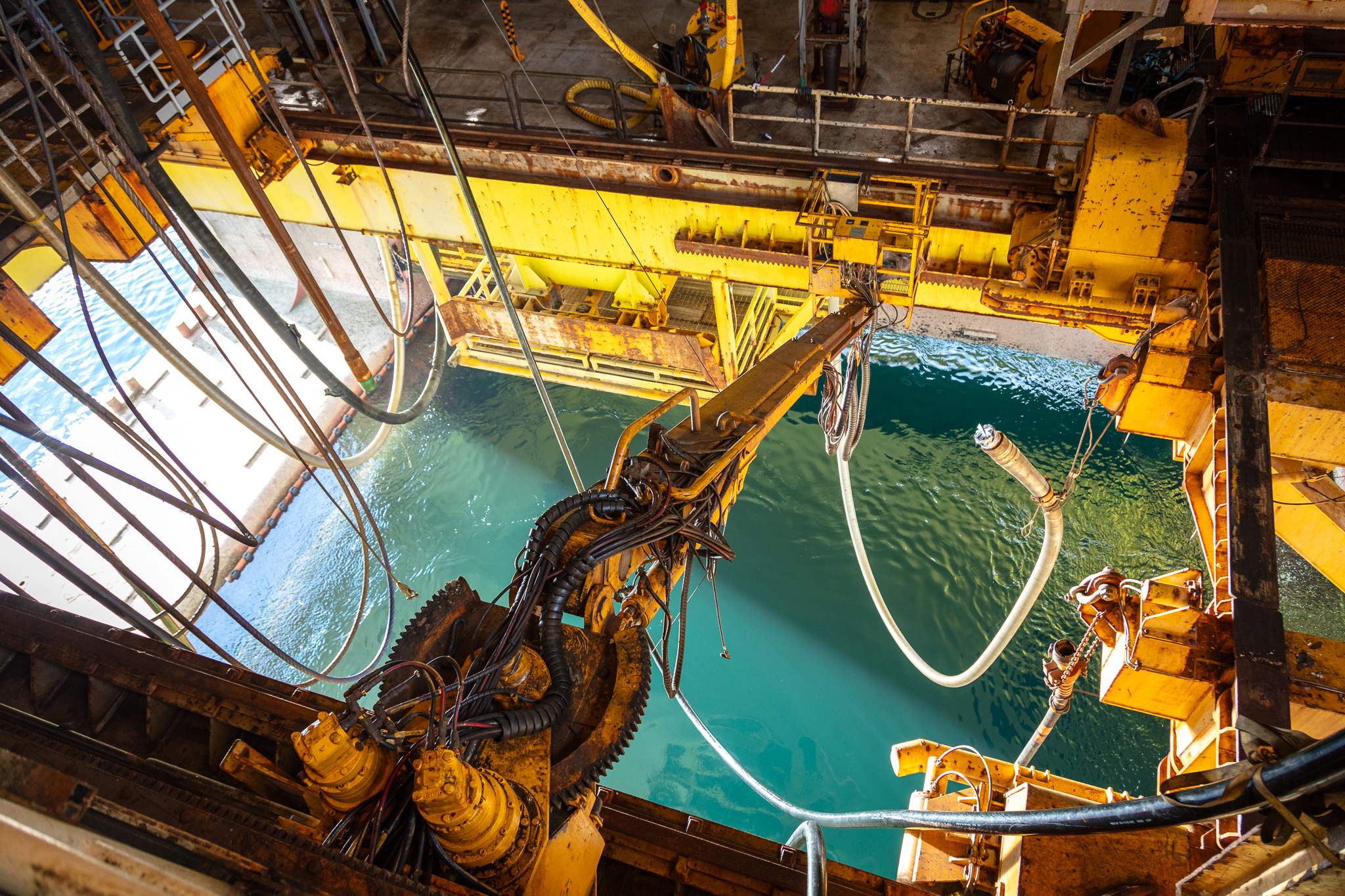
Dropped objects remain one of the most persistent and high-consequence risks offshore.
On rigs and elevated structures, equipment that was once securely fastened can loosen over time from weather, vibration, and wear. When that happens, bolts, tools, clamps, lights, gratings, and other components become potential “Drops” with the ability to cause serious injury, damage critical equipment, or halt operations.
The problem is not complexity. It is carelessness.
Many inspections are informal, inconsistent, or poorly documented. Hazards that go unnoticed today can become incidents tomorrow.
Why inspections matter:
Vibration and dynamic loads gradually loosen fasteners and supports.
Corrosion weakens brackets, clamps, and secondary retention.
Temporary equipment is often left behind after maintenance work.
Changes in layout or operations can introduce new drop hazards.
Near-misses frequently trace back to items that “should have been caught.”
A structured dropped-object inspection turns the risk into something manageable. It verifies that every item at height is secure, that secondary retention is in place, and that temporary equipment is either removed or properly fastened. It creates accountability through documentation and removes uncertainty from the worksite.

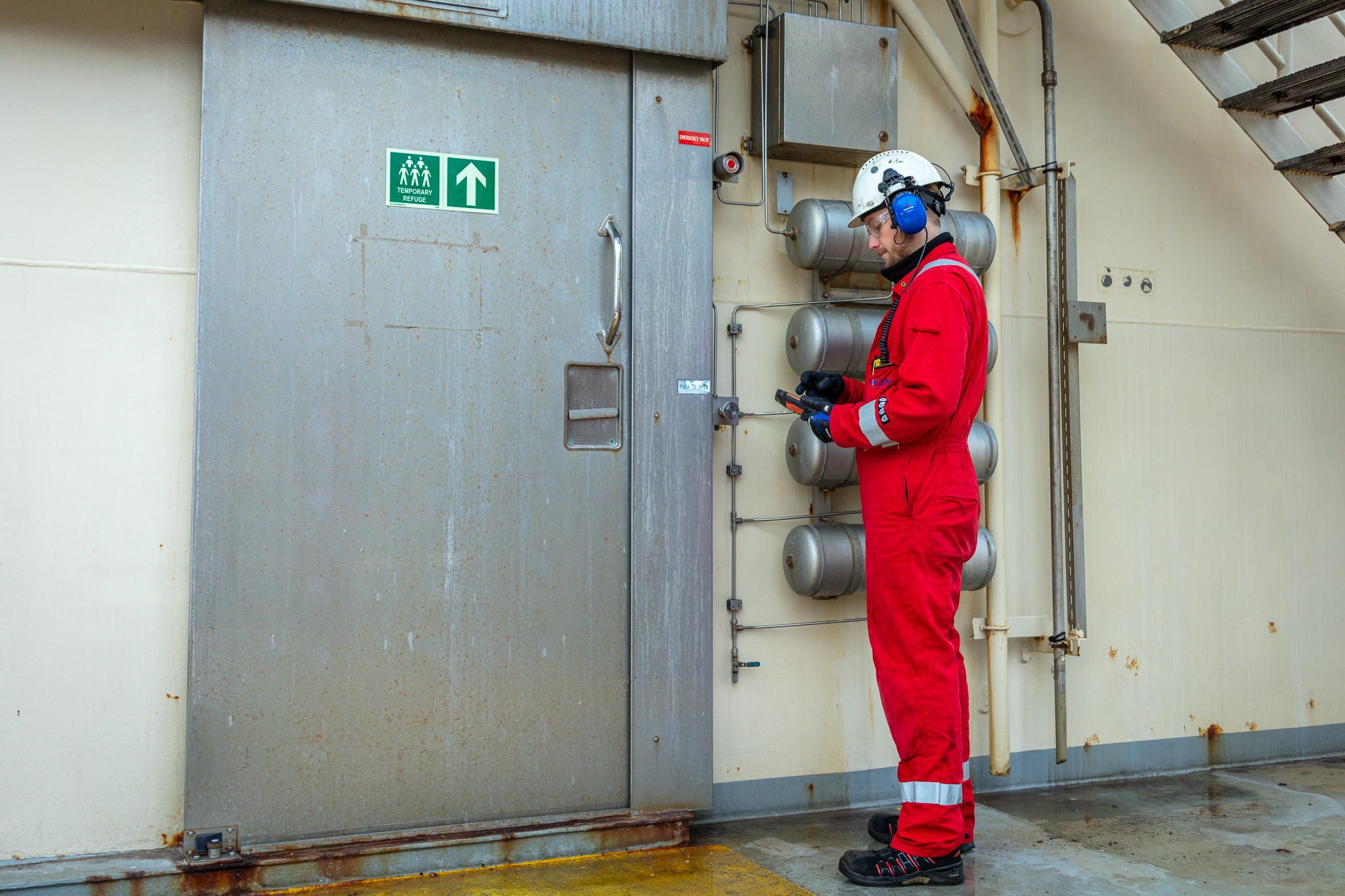
Watertight doors are a critical part of the offshore safety envelope.
They maintain compartment integrity, slow down flooding, and give crews time to react.
Regular inspection matters because:
Doors can drift out of alignment from vibration and structural movement.
Gaskets harden and lose compression over time, reducing sealing capability.
Closing mechanisms, sensors, and interlocks can fail without visible warning.
Corrosion and paint build-up can compromise functionality.
Incorrect operation after maintenance is a recurring root cause in offshore incidents.
When a watertight door does not seal as designed, the risk profile of the entire installation changes. A single failure can allow water to move freely between compartments, jeopardizing stability, evacuation routes, and the safety of personnel.